







Tilt-Shift Lenses for Architectural and Creative Photography
Tilt-shift lenses give photographers precise control over perspective and depth of field, solving technical challenges that standard lenses cannot address. Whether you're correcting converging verticals in architectural photography, achieving front-to-back sharpness in product shots, or creating miniature-like effects, these specialized lenses represent some of the most powerful creative tools available to professionals and serious enthusiasts.
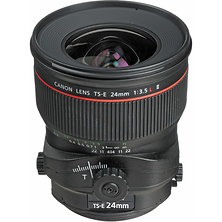
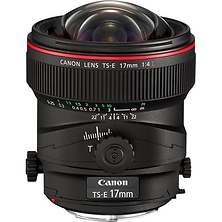
Tilt-shift lenses operate on the Scheimpflug principle, allowing you to manipulate the plane of focus independent of the image plane. This gives you control over two distinct movements: tilt and shift. Tilt rotates the lens element to change which parts of your scene appear in focus, creating selective focus effects or maximizing sharpness across angled subjects. Shift moves the lens parallel to the image plane, correcting perspective distortion without tilting the camera upward, which eliminates the converging verticals that occur when photographing tall buildings or interior spaces.
Whether you shoot Canon or Nikon systems, these specialized lenses provide the optical precision and mechanical control that professionals demand. Architectural photographers rely on shift movements to keep straight lines straight, real estate specialists achieve keystoning-free compositions, and product photographers create sharp focus across entire surfaces at close distances.
Understanding Tilt and Shift Movements
The tilt function rotates the lens barrel to change the plane of focus, following the Scheimpflug principle. This allows you to bring angled surfaces into focus without stopping down the aperture significantly. If you're photographing a product at an angle, tilt lets you keep the entire surface sharp while maintaining shallow depth of field. This is impossible with conventional lenses, where depth of field extends front to back along a plane parallel to the sensor.
The shift function moves the lens parallel to the image plane without tilting the camera body, correcting perspective distortion when capturing tall subjects. Instead of tilting the camera and creating converging verticals where lines lean inward, you keep the camera level and shift the lens upward. The result is a perfectly corrected architectural photograph.
Applications Across Professional Photography
Architectural photographers use shift movements for everything from exterior building shots to interior real estate photography. The ability to correct perspective distortion without moving the camera position makes it possible to capture clean, professional images that accurately represent spaces.
Product photographers employ tilt movements to achieve sharp focus across entire surfaces at the close distances where macro work happens. This eliminates the need to stop down to extreme apertures, which can introduce diffraction and reduce sharpness. Studio photographers value this precision control when photographing watches, jewelry, food, or any product requiring uniform sharpness.
Fine art and landscape photographers use tilt-shift techniques to create miniature-like effects or to control exactly which portions of a scene appear sharp. This creative control opens possibilities unavailable with standard lenses.
- Shift movements correct perspective distortion in architectural and interior photography
- Tilt movements isolate focus planes for product, macro, and creative work
- Manual focus design provides precise control without autofocus hunting
- Mechanical shift and tilt adjustments work independently or in combination
Pairing with Essential Accessories
A sturdy tripod is essential when working with tilt-shift lenses. The precise adjustments these lenses require benefit from rock-solid camera support. You'll appreciate the ability to make fine focus and composition adjustments without camera shake. Lens accessories such as quality protective filters help preserve your investment, while a reliable camera bag keeps your gear safe during location work. Some photographers add neutral density filters to extend shutter speeds in bright light when shooting tilt-shift work.
Who Uses Tilt-Shift Lenses
Professional architectural photographers depend on tilt-shift lenses as core tools in their kits. Whether shooting building exteriors, interior spaces, or real estate listings, the ability to correct perspective without tilting the camera is essential for client deliverables.
Product and studio photographers use these lenses when subjects require uniform sharpness across surfaces or when creative depth-of-field control can enhance the image. The miniature-effect has become popular in commercial photography for beverages, food styling, and other product categories.
Fine art and landscape photographers experiment with tilt-shift techniques to create selective focus effects or to control exactly which portions of a scene render sharp. The creative possibilities extend beyond the specialized applications.
Frequently Asked Questions
What is the difference between tilt-shift lenses and perspective-control lenses?
Tilt-shift and perspective-control are terms used interchangeably in photography. Perspective-control is the older term, referring specifically to the shift function that corrects perspective distortion. Modern lenses often include both tilt and shift capabilities, so the terms are largely synonymous. Canon and Nikon both offer perspective-control and tilt-shift lenses designed for professional photography.
Can I use a tilt-shift lens on both full-frame and crop-sensor cameras?
Yes. Tilt-shift lenses from Canon and Nikon are designed to work on both full-frame and APS-C crop-sensor bodies of their respective systems. The focal length and angle of view will differ on crop-sensor cameras due to the crop factor, but the tilt and shift mechanisms function identically.
Do I need autofocus with a tilt-shift lens?
Most tilt-shift lenses use manual focus, which is actually an advantage when making precise adjustments. Manual focus lets you focus-then-compose without autofocus hunting or accidental refocus. For architectural and product photography, the deliberate, controlled focus method of manual lenses aligns well with how photographers use these specialized optics.
How do I achieve the miniature effect with a tilt-shift lens?
Tilt the lens to create a shallow plane of focus cutting through the middle of a scene. Areas above and below fall out of focus, creating the visual impression of a tiny model. Increase saturation and contrast during editing to enhance the miniature diorama effect.
What focal lengths are available in tilt-shift lenses?
Canon and Nikon offer tilt-shift lenses in a range of focal lengths, from ultra-wide perspectives around 17mm to telephoto options at 85mm or beyond. Wider lenses excel at architectural work, normal focal lengths handle product photography, and longer options provide compression for distance subjects. Your choice depends on your primary applications.
Are tilt-shift lenses weather sealed?
Like most professional camera equipment, many tilt-shift lenses feature dust and moisture resistance, though specific sealing levels vary by model. Check the specifications for your chosen lens. Regardless of sealing, protective lens accessories like lens caps and UV filters help protect your investment.
Shop Tilt-Shift Lenses at Samy's Camera
Tilt-shift and perspective-control lenses represent a significant investment, but their specialized capabilities solve problems that standard lenses simply cannot address. Whether you're an architectural professional, a studio photographer seeking precise depth-of-field control, or a creative artist exploring new visual techniques, these lenses unlock possibilities unavailable with conventional optics. Samy's Camera provides fast shipping, expert advice, and a full selection of Canon and Nikon equipment to support your creative vision. Browse our collection online or contact our team for personalized recommendations based on your specific photography needs.